There is a reason handwriting is still central to what we do at Pinecone in 2026, even when every other subject in every other classroom seems to be migrating to a screen. It is not nostalgia. I am not that kind of teacher. The reason is that decades of neuroscience keep pointing in the same direction: kids learn more, remember more, and think more clearly when they write things by hand.
The Princeton and UCLA study most parents have never heard of
In 2014, researchers at Princeton and UCLA ran what has become a famous experiment. They took college students, put them in the same lectures, and let half take notes on laptops while the other half took notes with pen and paper. The laptop group typed more words. On the surface, their notes looked more complete.
Then the researchers gave everyone a comprehension test on the lecture material. The handwriting group outperformed the laptop group, and the gap widened on conceptual questions rather than fact-recall questions. The students taking notes by hand understood the material more deeply.
The researchers named the mechanism generative encoding. When you handwrite, you cannot possibly transcribe everything a lecturer says. You are forced to summarize in your own words as you go. That summarization is a form of thinking. Typing lets you avoid the thinking. Writing by hand forces you into it.
What handwriting does to a developing brain
The generative-encoding finding was just the beginning. In the ten years since, neuroscience has kept adding to the case. The fine-motor act of forming letters activates parts of the brain that typing does not. The premotor and frontal regions light up when someone writes a letter with a pencil, and stay quiet when the same person types the same letter. Those brain regions are involved in memory formation and language processing.
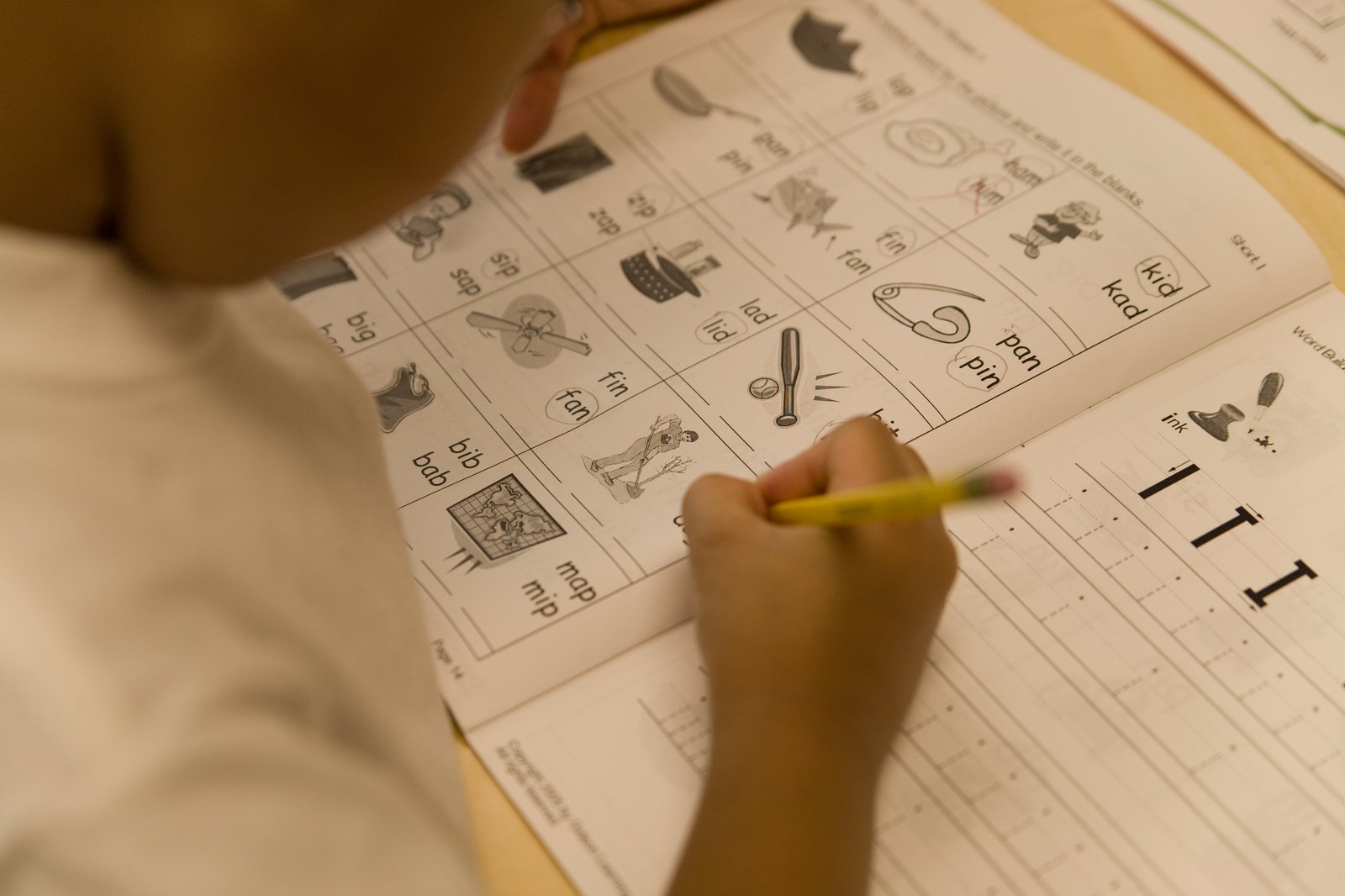
For young children whose brains are still building the connection between letters and sounds, this matters enormously. A 5-year-old who traces the letter A with a pencil is doing something biochemically different from a 5-year-old who taps A on a screen. Both children see the letter. Only one is building the neural machinery that will make reading fluent later.
There is also newer research on divergent thinking, which is fancy language for "brainstorming." Students consistently generate more creative, more varied ideas when they brainstorm with pen and paper than when they brainstorm with a keyboard. The physical act of writing seems to loosen the mind in a way that typing does not.
Why I still assign handwriting at Pinecone
When a parent asks me why we still hand our students a pencil in 2026, this is the honest answer: because it works better than the alternative, and the evidence is not close. I have watched hundreds of children move through the writing program over 30 years, and the ones who did the work by hand consistently ended up with stronger sentences, deeper thinking, and better retention than the ones who tried to shortcut the process.
I am not against technology. My students use computers plenty. But when we are learning to form a sentence, or brainstorm an essay, or work through a math problem, the pencil comes out. That is not a traditionalist gesture. It is the fastest way to get the outcome we are after.
What this means for your child
If your child is doing all of their schoolwork on a screen and you have a nagging sense that something is missing, the research probably supports your intuition. It does not mean throwing out the laptop. It means keeping some part of learning offline: a handwritten journal, handwritten math practice, handwritten notes on assigned reading. Even 15 minutes a day of pen-and-paper work changes the neurological game.
At Pinecone, that is not something we have to think about. It is built into everything we do. Every writing session, every grammar exercise, every math booklet starts with a pencil in the student's hand. And when a former student comes back years later and tells me they can still see their handwriting on that first sentence they wrote in 3rd grade, I know we did something right.
If you want to see how we build handwriting into your child's learning, our children's writing program is where most families start.