
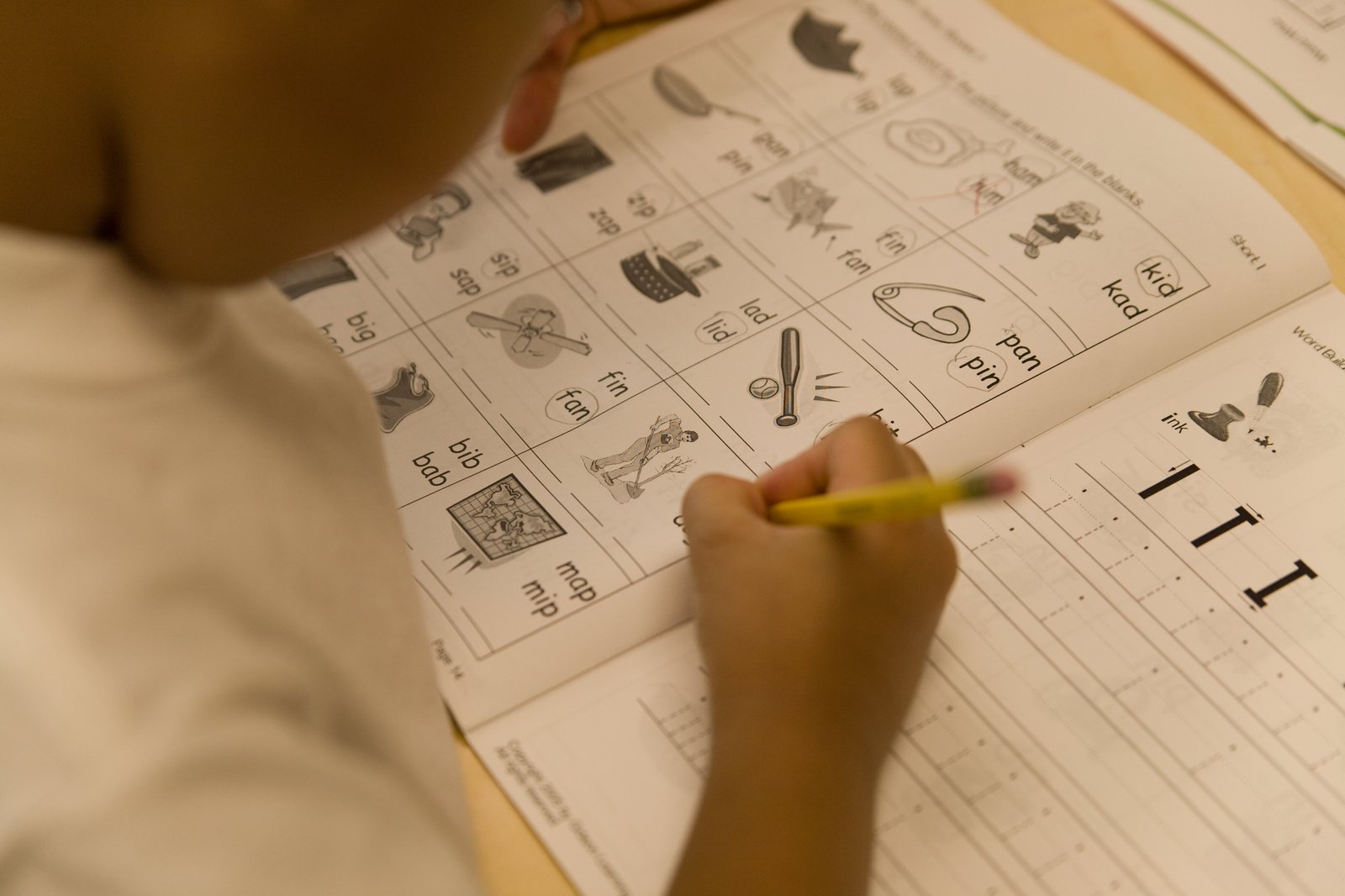
Of all the phone calls I get from parents, one version of the same story is probably the most common. Their child used to be fine with writing, or at least not actively opposed to it, and then something shifted. Suddenly the homework fights are brutal, the paragraphs come out as single sentences, and the parent is wondering whether their kid has developed a learning difference overnight. After 30 years of teaching children in Evergreen, I can tell you that this is almost always a predictable moment in a child's development, and the good news is that it has a predictable solution.
The moment this usually happens
In my experience, the sudden collapse of a child's willingness to write happens most often somewhere between second and fifth grade, with a second common peak in middle school. The reason, in both cases, is that school writing expectations take a sudden jump that the child was not prepared for. In second and third grade, teachers expect kids to move from single sentences to connected paragraphs, which requires an entirely different kind of thinking than most children have been explicitly taught. In middle school, the leap is from paragraphs to multi-paragraph essays with a thesis and supporting evidence, which again assumes a set of skills most schools do not actually teach in a sequenced way.
A child who could write perfectly fine when the task was to describe her weekend in three sentences will often fall apart when asked to produce a full paragraph about a character in her reading book. The skill she needs is different, and nobody showed her how to do it. What looks like a sudden hatred of writing is usually a sudden encounter with an invisible gap.
What this is not
Before I describe what to do, I want to address what parents usually fear first. In the overwhelming majority of cases, a child who suddenly hates writing does not have a learning difference, has not lost motivation permanently, and is not going to grow up to be an adult who cannot write. These are the three things parents commonly jump to, and none of them are usually true.
That said, if the resistance to writing is accompanied by other patterns that have been consistent over time, such as difficulty with letter reversals, trouble following multi-step instructions, or significant struggles with reading comprehension, it may be worth having your child evaluated. I have 30 years of experience working with children who have dyslexia, ADHD, dysgraphia, and other learning differences, and I can help you think through whether an evaluation makes sense. More on that on our learning differences page.
What not to do
The most common parent reaction to a child who suddenly hates writing is to double down on practice. More homework help, more corrections, more red pen, more "let's just get through it." I understand the instinct, but it almost always makes things worse. The child's problem is not that she has not written enough. The problem is that she has been asked to do something she does not know how to do, and every additional attempt without new instruction confirms her growing suspicion that writing is something she is bad at.
Equally unhelpful is removing the stakes entirely by letting her skip assignments or doing the writing for her. Both of those teach her that writing is something to be avoided or outsourced, which is the exact opposite of what she needs to learn.
What actually works
The intervention that reliably solves this problem is to identify the specific skill gap and address it directly, at the exact right level, with enough patient repetition that the child feels herself getting better at it. In practice, this usually means going backward before going forward. If a fourth grader is struggling with paragraphs, I will often spend the first few weeks on sentence construction, because that is almost certainly where the real gap is. Rebuilding the foundation is not a punishment or a demotion. It is the fastest route back to confidence.
Alongside the skill work, I will usually ask parents to pull back from school-writing homework conflicts for a few weeks. The classroom teacher will understand, and the breathing room gives the child a chance to associate writing with something other than frustration. By the time she returns to classroom assignments, the foundation is stronger and the resistance has usually started to fade.
When to bring in outside help
Some parents can work through this themselves, especially if they are patient teachers and have the time. Most parents cannot, because the emotional dynamic between a parent and a child around schoolwork makes calm, sequenced instruction extremely difficult to deliver. If you have tried to help your child yourself and found that the sessions end in tears for one or both of you, that is a signal to bring in a third party, not a signal that you are failing. A tutor sitting next to the child, who has no history of past homework battles with her, can often make progress in a few weeks that a parent cannot make in months.
This is the specific situation that Pinecone's writing program is designed to address. We work from a sequenced curriculum that starts wherever the child actually is, and we move forward one small step at a time with real support. Most of our families report that the dread around writing fades within the first month or two, long before the actual grades change.
A note on timing
One thing I would gently urge parents not to do is wait too long. The gap between what a child can produce and what school expects widens every year, and a child who has decided she is bad at writing in third grade will almost always still believe that about herself in seventh grade unless something interrupts the story she is telling herself. The best time to address a sudden hatred of writing is right when you first notice it. The second best time is now.
If any of this sounds like what is happening at your house, I am happy to talk through it with you. Call me directly at (408) 425-5857 for a 15-minute conversation about your specific child. No assessment fee. No obligation.